Beverage Industry Trends: What Is Driving the Future of Beverage Manufacturing?
Walk into most bottling plants today and here's what you'll actually notice: the machines are talking to each other more than the people are. That's the real story behind the beverage industry trends pulling the sector toward 2026 not any single flashy launch, but a quiet shift in how plants run day to day.
There are three factors meeting each other. Customers desire beverages that offer some value besides taste: give them energy, support their digestive system, improve sleep. The supply chain is still sore, and therefore plant managers cannot ignore production interruptions anymore. Thirdly, technology advanced enough so that sensors became affordable, AI could identify a potential problem before it caused a stoppage, and sustainable packaging did not necessarily mean compromising on something anymore.
Brand owners who treat all this as a packaging refresh will fall behind the ones who treat it as an operations rebuild. That's really what separates the plants riding these beverage industry trends from the ones playing catch up and increasingly, beverage manufacturing automation is the tool that decides which side of that line you land on.
Top 10 Beverage Industry Trends That Will Change the Industry's Future
1. Functional, better for you formulations. Adaptogens, nootropics, and gut health ingredients have gone from health store niche to mainstream shelf space. Formulation lines now handle smaller batches with tighter tolerances.
2. Low and no alcohol everything. Not a fad a permanent category. Breweries and distilleries are retrofitting lines to run dealcoholized products alongside their core range.
3. Hyper local, micro batch production. Regional breweries and bottlers compete on freshness and story now, so smaller, flexible runs are winning over one giant line grinding the same SKU for months.
4. Eco friendly, lightweight packaging. Cans are thinner, bottles lighter, recycled content clauses showing up in more contracts. Among current food and beverage trends, this is the one with the most direct line level engineering impact.
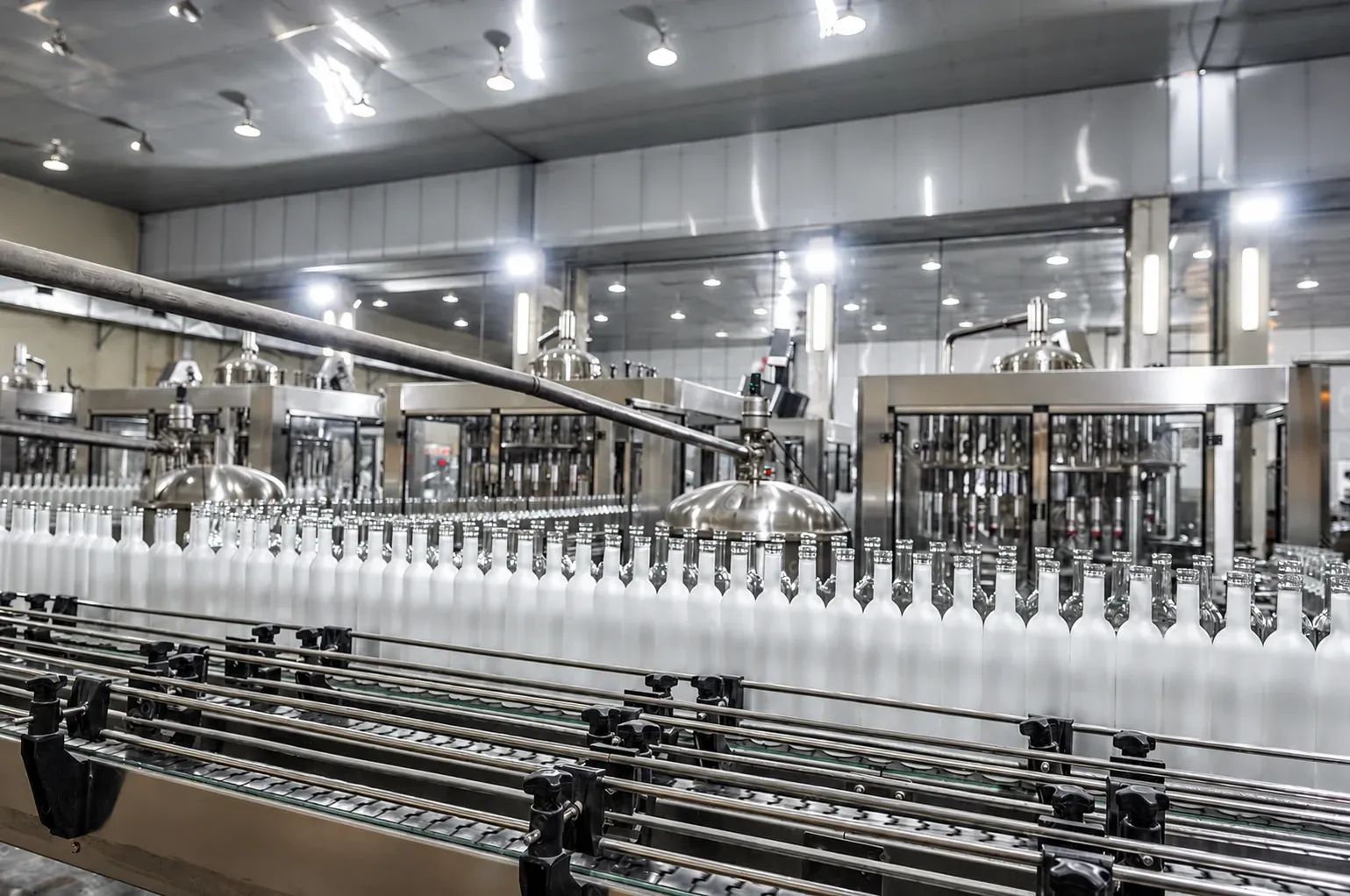
5. Smart, connected plant floors. Sensors on fillers, cappers, and labellers now feed live data into dashboards operators actually check. This is where beverage manufacturing automation stops being a buzzword in a slide deck and starts being how the shift actually runs and once a plant tastes real beverage manufacturing automation, going back feels unthinkable.
6. Water stewardship as a real budget line. Water scarce regions push plants toward closed loop rinsing and recovery, partly for cost, partly because permits demand it.
7. AI driven predictive maintenance. Instead of fixing a filler after it jams, plants use vibration and temperature data to catch the failure a week out. Fewer surprise stoppages, less scrapped product.
8. Traceability from grain (or fruit) to glass. Retailers and regulators want origin data now. Batch level tracking is table stakes, not a nice to have.
9. Modular, reconfigurable equipment. Instead of a new line for every format, plants want gear that switches between cans, bottles, and pouches in hours, not weeks.
10. Direct to consumer, agile SKU turnover. Brands launch limited runs and test flavours faster than ever, so production planning moves at the same pace.
How Technology Is Transforming Modern Beverage Production
Here's the thing nobody tells you when shopping for new equipment: the individual machine matters less than how well it talks to everything around it. A filler running 40,000 units an hour is useless if the labeller downstream can't keep pace, and no amount of beverage processing technology fixes a bottleneck nobody's watching.
That's the real promise of modern beverage processing technology not one flashy machine, but the layer of software and sensors tying the whole line together. Vision systems catch mislabelled bottles at line speed. Predictive algorithms flag a pump drawing slightly more current than it should, days before it fails outright. None of this means gutting the plant. Most facilities retrofit sensors onto equipment they already own, and honestly, that gradual approach to beverage processing technology adoption is good news if you're worried about capital costs.
The plants pulling ahead aren't necessarily the ones with the newest buildings. They're the ones treating beverage production efficiency as a data problem first and a mechanical problem second, and pairing that data with beverage processing technology that actually gets used this mindset shift is quickly becoming one of the defining beverage industry trends of the decade.
Comparative Analysis: Traditional vs Future Ready Facilities
| Parameter | Traditional Manufacturing | Future Ready Smart Facilities |
|---|---|---|
| Resource & Energy Management | Manual meter readings, reactive fixes after energy spikes | Real time monitoring with automated load balancing and alerts |
| Packaging Sustainability | Standard virgin materials, minimal recycled content | Lightweighted, recyclable, and often recycled content packaging by design |
| Data Integration & Traceability | Paper logs or isolated spreadsheets per shift | Connected batch tracking from raw material to finished pallet |
| Consumer Personalization Agility | Long changeover times, large minimum runs | Modular lines that switch formats and flavours in hours |
Why Sustainable Production Is Essential for Beverage Manufacturers
Sustainability used to be the department with the smallest budget line. That's changed, and not entirely by choice retailers ask for carbon data before signing a shelf agreement now, and some regions require water use reporting just to keep the permit.
There's a business case here too, separate from compliance. A plant that cuts water use by 20% isn't just doing good it's spending less on water and on the energy to treat it. These food and beverage trends toward lower resource use tend to pay for themselves within a few years on mid sized lines, faster on larger ones, and they push beverage production efficiency up as a side effect rather than the goal.
The manufacturers getting this right aren't bolting sustainability onto the end of the process. They're building it into line design from day one: smaller motors that don't idle at full draw, rinse water recovery loops, packaging specs that assume recyclability instead of treating it as an afterthought. It's one of the beverage industry trends that pays for itself the fastest, honestly.
Why Choose SEPPA Solutions for Future Ready Beverage Production?
This is exactly the gap SEPPA Solutions works in. We're not a parts supplier bolting sensors onto whatever line you already have we design and integrate beverage manufacturing equipment built around where the industry is actually heading, not where it stood five years back.
That means filling and packaging systems that flex between formats without a full changeover, beverage manufacturing automation layers that give operators real visibility, and engineering support that treats water and energy use as design inputs, not afterthoughts. Whether you are ramping up a craft facility or upgrading an existing plant, our engineers will work with yours to increase your beverages’ efficiency without undergoing years of construction.
How Beverage Manufacturers Can Prepare for the Future
Start smaller than you think you need to. Audit your current line for the single biggest point of failure the machine that, if it goes down, stops everything else. Fixing that one weak point, with either better maintenance data or a targeted beverage processing technology upgrade, usually delivers the fastest jump in beverage production efficiency you'll see all year.
From there, layer in software before new machines. Plants are often surprised how much beverage manufacturing automation they can add just by connecting sensors to equipment they already own no new hardware required.
Finally, treat packaging and sustainability specs as line requirements, not marketing requests handed down after the fact these are beverage industry trends worth building into procurement, not reacting to later. Getting operations involved early avoids the scramble when a new recyclable format doesn't run properly on old tooling.
Final Thoughts: Staying Ahead of Beverage Industry Trends
None of this has to happen overnight. The plants staying relevant are the ones making steady, deliberate upgrades a sensor retrofit here, a packaging spec change there instead of waiting on one big transformation moment that never quite shows up.
The beverage industry trends shaping the next few years reward plants that treat flexibility as core infrastructure, not a project for next quarter. Find the weakest link on your line, build data visibility around it, and the rest tends to follow on its own.
Frequently Asked Questions About Beverage Industry Trends
1. Which beverage industry trends are growing fastest right now?
As far as the current trends in the beverage sector, the notable ones from the shelf include functional drinks and low or zero alcohol drinks, whereas from the production line include predictive maintenance and connected sensors.
2. Can small and mid sized brands actually afford automation?
Yes, in stages. Most start with sensor retrofits rather than a full line replacement, which keeps upfront cost manageable while still improving beverage production efficiency.
3. Does sustainable production cost more in the long run?
Usually the opposite. Water and energy reduction projects tend to pay back within a few years through lower utility costs.
4. How do I future proof a plant line I already have?
Focus on modularity and data first. Adding sensors and predictive maintenance software to existing beverage manufacturing equipment usually beats a full line replacement.
5. What role does data play in modern beverage factories?
Data is what turns a collection of machines into an actual system. Traceability, predictive maintenance, and quality control all depend on line level data being collected and actually used, not just stored somewhere nobody looks.