If you've spent any time pricing out a bottling line, you already know the sticker shock. That gap usually comes down to one decision: do you build your line from separate, standalone units, or invest in a single integrated pet bottle manufacturing machine? I've watched plant directors agonize over this, and neither option is universally better. It depends on your volume, your labour market, and how much floor space you're willing to give up. Let's walk through it.
PET Bottle Manufacturing Machine: Key Features & Production Capabilities
Essentially, the process that takes place in a pet bottle manufacturing machine is basically one: the transformation of a solid preform into an air tight bottle through the process of stretch blow molding. This involves reheating the preform to its glass transition temperature, stretching it with the help of a core rod, and blowing it out by air pressure. Simple in concept, unforgiving in execution.
What separates a reliable pet bottle machine from a mediocre one usually isn't the blow molding step itself. It's everything around it: how evenly the preform heats, how tightly the mold clamps, and how quickly the pet bottle manufacturing machine can cycle without warping the bottle's base. Modern operators should expect cavity counts that scale with demand, air recovery systems that cut compressed air costs, and quick change tooling so format changes don't cost a shift. A well built pet bottle manufacturing machine also gives you consistent wall thickness distribution, which matters more than most buyers realize once material costs start adding up downstream. And before you even get to blow molding, the upstream pet bottle manufacturing process, resin drying, preform injection, and quality sorting, sets the ceiling for how good your final bottles can be.
Integrated vs Standalone PET Bottle Manufacturing Machines
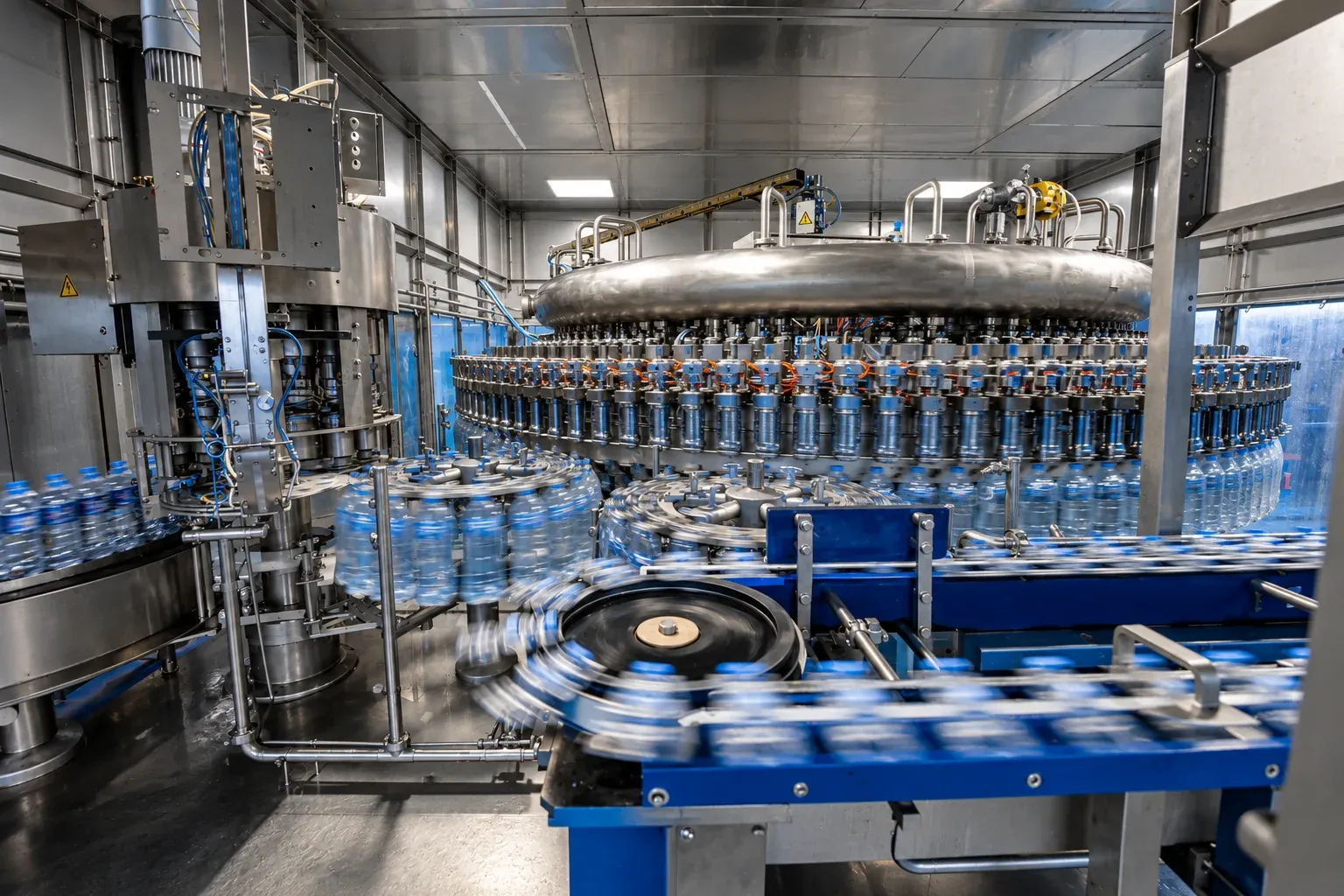
This is where decisions are really made. A single line machine system operates in such a way that all your feeders, blow molders, and other machinery are independent machines linked with conveyors, where your operators (or robotic arms) move your bottles from one machine to another. On the other hand, the integrated combi machine operates using a rotary table system that integrates all the processes into one operation.
Standalone pet bottle manufacturing machines are the more familiar path for smaller operators. You buy what you need now, and add a labeller or filler later without touching the pet bottle machine. Every transfer point between machines is a place where bottles get damaged, contaminated, or slowed down. If you're running a modest pet bottle production line with predictable volume, this modularity can genuinely work in your favour, and it keeps your pet bottle making machine price manageable while you're still proving out demand.
Integrated combi systems compress that same pet bottle production line into roughly a third of the floor space, and they eliminate most of the manual handling between stages. That's a serious advantage in facilities where square footage is expensive or simply unavailable. But you're committing to a single vendor's ecosystem, and if one subsystem needs maintenance, the whole pet bottle manufacturing machine can stop.
Cost, Production Capacity & Efficiency: What's the Difference?
Let's talk numbers, because this is where owners actually make decisions. Physical layout in the pet bottle manufacturing process has a direct effect on downtime. Every conveyor transfer adds friction: jams, static buildup, and micro stops that quietly show up in your monthly output report from the pet bottle production line.
Thermal preform conditioning is another quiet cost driver. In a standalone pet bottle manufacturing plant, preforms often cool between the feeder and the oven, forcing the heater to work harder. Integrated systems keep preforms moving through a continuous thermal path, wasting less energy on re heating. Over a two shift operation, that adds up to a meaningful utility bill.
Where standalone setups win is flexibility during unplanned downtime. If your capper goes down on a standalone pet bottle production line, your pet bottle machine keeps running and you stockpile bottles. On an integrated pet bottle manufacturing machine, a fault anywhere can halt the entire system, so plan around it with spare parts and preventive maintenance before your pet bottle manufacturing process goes live.
Comparative Analysis: Standalone vs Integrated Rotary Combi Systems
| Parameter | Standalone Blow Molders | Integrated Rotary Combi Systems |
|---|---|---|
| Initial Capital Outlay & Floor Footprint | Lower PET bottle making machine price per unit; larger combined footprint due to separate machines and conveyors | Higher single purchase cost; compact footprint, often 30–40% less floor space |
| Inter Machine Handling & Labour Dependency | Requires operators or conveyors between stages; more handling touchpoints | Minimal manual handling; fewer operators needed per shift |
| Energy Consumption & Heating Efficiency | Preforms cool between stages, increasing reheat energy demand | Continuous thermal path reduces reheating losses and overall energy draw |
| Overall Line Speed & ROI Payback Period | Slower effective throughput due to transfer delays; payback often 18–30 months | Faster cycle synchronization; payback often 12–20 months at higher volumes |
Numbers here vary by cavity count, bottle size, and shift structure, so treat this table as a starting framework for your own pet bottle production line rather than a guarantee.
ROI Comparison: Which PET Bottle Machine Offers Better Value?
The pet bottle making machine price for a standalone unit is almost always lower than an equivalent-capacity combi system, and for a business just getting started, that lower entry cost genuinely matters. Cash flow constraints are real, and starting standalone before scaling into integration is a fine strategy.
But "value" and "price" aren't the same thing. Factor in labour savings, floor rent, and energy use over a five to seven year asset life, and an integrated pet bottle manufacturing machine often overtakes the standalone pet bottle machine in total cost of ownership. Plant owners fixate on the pet bottle making machine price on the invoice and ignore the extra operators they'll need for the next decade.
The honest breakeven point tends to sit somewhere between 8,000 and 15,000 bottles per hour of sustained demand. Below that, a standalone pet bottle machine is usually the smarter financial move, especially when the pet bottle making machine price is the main constraint on your budget. Above it, integration starts paying for itself faster than most owners expect.
How to Choose the Right PET Bottle Manufacturing Machine
Start with your actual sales data, not your ambitions, and map it against your target pet bottle manufacturing process. A pet bottle manufacturing machine sized for demand you hope to have in three years is capital sitting idle today. Match your pet bottle manufacturing machine to your current run rate, with headroom for one realistic expansion, not five hypothetical ones.
Check utility infrastructure before the equipment brochure. Compressed air, electrical service, and chilled water availability all constrain what a pet bottle production line can actually run, regardless of the paper rating. Also look honestly at your labour market and your pet bottle manufacturing plant's staffing reality. If skilled operators are hard to find or expensive in your region, the labour reduction case for an integrated pet bottle manufacturing plant gets a lot stronger, even if the pet bottle making machine price runs higher upfront.
Why Choose SEPPA SOLUTION for Beverage Production?
SEPPA SOLUTION builds both standalone rotary blow molders and fully integrated combi systems, so their recommendation isn't shaped by having only one pet bottle manufacturing machine to sell. Their engineering team reviews your pet bottle production line, compressed air infrastructure, and growth timeline first.
What stands out working with SEPPA SOLUTION is the transparency around pricing and lead times for every pet bottle manufacturing plant they design. You get a real pet bottle making machine price early, not a moving target that shifts after you've committed. Their turnkey support covers layout planning, installation, operator training, and ongoing maintenance for your pet bottle manufacturing plant, which matters once the pet bottle manufacturing process is live and you need a partner who answers the phone.
Common Mistakes When Buying PET Bottle Manufacturing Machines
The most common mistake is underestimating compressed air demand. Blow molding is air hungry, and undersized compressors will bottleneck a perfectly good pet bottle manufacturing machine. Get an air audit done before you sign anything.
The second mistake is skipping a utility infrastructure review for the pet bottle manufacturing plant, forgetting to check whether the electrical panel can support the new load. Third, and often the most expensive long term, is failing to audit a vendor's actual pet bottle manufacturing process on the shop floor. Watch a real pet bottle machine run before you buy one; photos and spec sheets hide too much, no matter how good the pet bottle making machine price looks.
FAQs About PET Bottle Manufacturing Machines
1. Do integrated combi lines really reduce contamination risk?
Yes. Fewer transfer points on an integrated pet bottle production line mean fewer chances for contamination, which matters most for food and beverage work.
2. How do energy recovery features affect long term costs?
Air recovery systems reuse blow air pressure that would otherwise vent to atmosphere, cutting the compressed air energy costs of a pet bottle manufacturing machine over its operating life.
3. Is maintenance harder on an integrated system?
It's different, not necessarily harder. You maintain fewer machines on the pet bottle production line, but a fault can affect more of it at once, so preventive maintenance matters more.
4. Can one pet bottle manufacturing machine handle multiple bottle sizes?
Most machines support format changes with mold swaps, though changeover time varies between standalone and integrated pet bottle manufacturing machine designs.
5. How should I think about depreciation on this equipment?
A pet bottle manufacturing machine typically depreciates over 7-10 years, though heavy multi shift use in a busy pet bottle manufacturing plant can shorten its practical service life.