Each plant manager can recall that machinery quote that got them nervous: two prices, one sensible and one staggering, both presented by a salesperson who insists his is the better deal. Deciding whether to buy an automatic or semi automatic PET blow molding machine is probably one of the biggest investment choices that a bottling company has to make, and choosing wrong is more than just bad for finances it will waste precious factory space, production hours, and in some cases even cost an entire year's goals. Here you can learn what truly distinguishes these two types of machinery, where hidden costs lie, and how to pick equipment that fits your current business rather than future aspirations.
What Is a PET Blow Molding Machine?
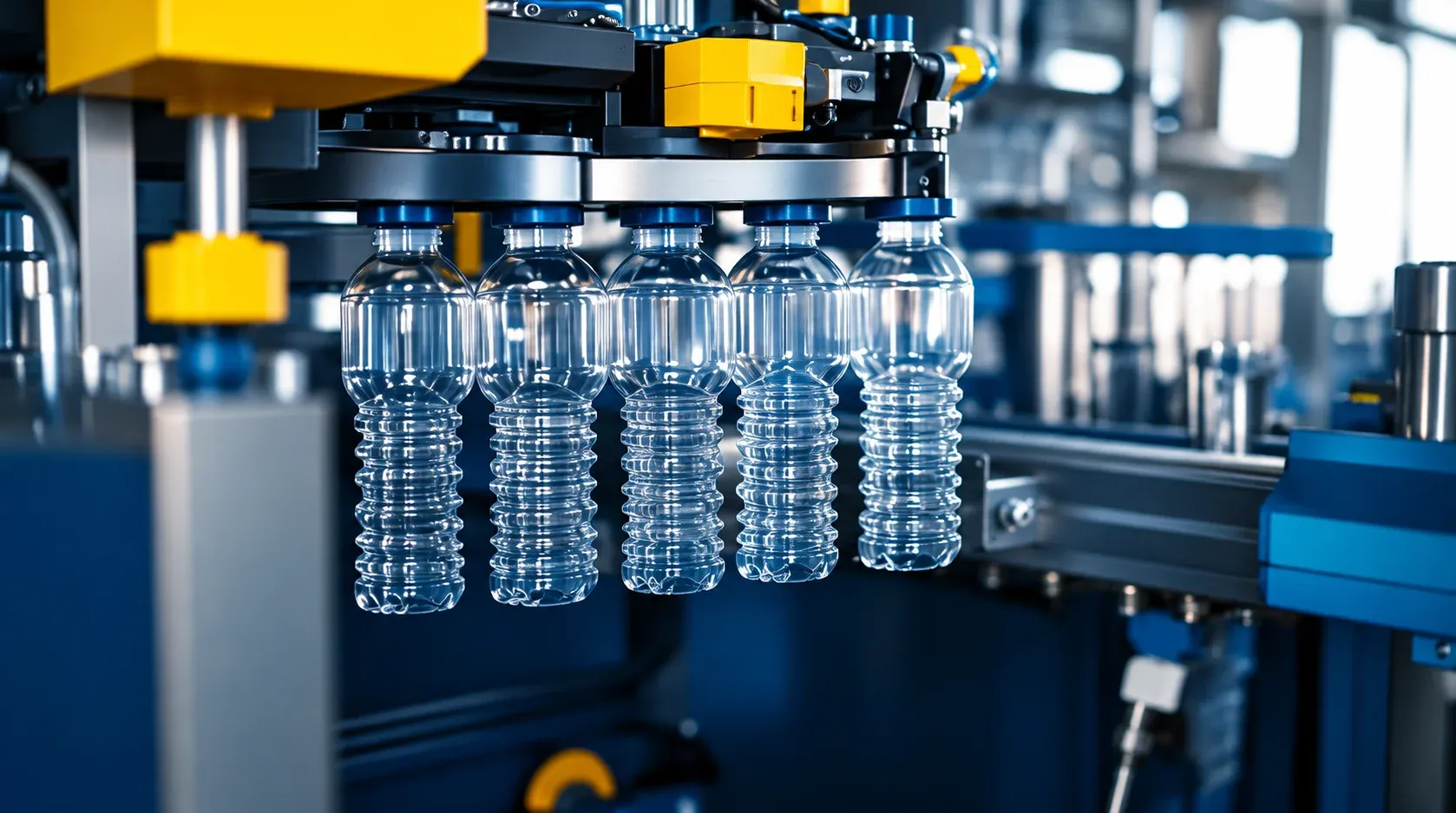
When bottles are manufactured with the help of PET plastic, the manufacturing process begins with preforms, which are shaped like test tubes made out of plastic. In stretch blow molding, these processes take a few seconds only and are done by the following procedures: heating of the preforms to make them flexible; stretching of the preforms with the help of a rod and blowing them with high pressure air to occupy the mold of the required shape.
Depending on who you ask, the same equipment gets called a pet bottle blowing machine, a pet bottle making machine, or simply a plastic bottle making machine. The terms get used almost interchangeably on the shop floor. The physics underneath doesn't change. What changes is how much of that process still needs a human hand, and that's the real question this guide answers.
Automatic vs Semi Automatic PET Blow Molding Machines
The line between these two categories of PET blow molding machine comes down to one question: who's handling the preform?
Semi Automatic Operation
On a semi automatic pet bottle making machine, an operator manually loads cold preforms into the heating oven and, once warmed, moves them by hand into the blow mold. From there, the machine takes over: clamping, stretching, and blowing the bottle before ejecting it. It's automated mechanically but still leans on a person for the handoffs. That dependency keeps a semi automatic pet bottle blowing machine affordable, and caps how fast it runs.
Automatic Operation
A fully automatic PET blow molding machine removes the operator from the loop almost entirely. Preforms load from a hopper, travel through the heating tunnel, get picked up by a transfer arm, and land in the mold. Add a labelling station or filler downstream and you've got a continuous automatic PET production line that barely needs supervision. Cycle times shrink because the machine isn't waiting on human reflexes.
PET Blow Molding Machine Capacity & Efficiency
Output varies wildly by cavity count. A single cavity semi automatic machine reaches about 600 bottles per hour; with two cavities and a fast worker, this goes beyond 1,000 bottles an hour. Automatic PET machines start where semi automatic ones stop: a small rotary machine with two or four cavities is capable of processing 1,500 to 3,000 bottles per hour, while a high cavity rotary machine may process beyond 20,000 bottles an hour.
Heating stability matters as much as raw speed. Ovens with more, better zoned lamps heat preforms evenly, keeping wall thickness consistent, which every pet bottle blowing machine buyer eventually cares about. Automatic lines also run servo driven stretch rods and air recovery systems that reclaim unused blow air pressure, trimming the compressed air bill that otherwise eats into margins as an automatic pet production line scales up.
Comparative Analysis
Here's the side by side most buyers want before anything else: how a semi automatic PET blow molding machine stacks up against its fully automatic counterpart.
| Parameter | Semi Automatic PET Blow Molding Machine | Automatic PET Blow Molding Machine |
|---|---|---|
| Production Output (Bottles/Hour) | ~200–1,800 BPH, capped by operator speed and cavity count | ~1,500–20,000+ BPH, scaling with cavity count and rotary configuration |
| Operator Labor Intensity | 1–2 operators per machine, continuous manual loading and transfer | Minimal; one technician often oversees several automatic PET lines |
| Initial Capital Investment | Lower, roughly $4,000 to $10,000 for a 2 to 4 cavity unit | Higher, typically starting in the tens of thousands and climbing with speed |
| Consistency & Weight Tolerance | Wider variance, tied directly to operator consistency | Tight, repeatable tolerances, often within a gram bottle to bottle |
Benefits of Automatic and Semi Automatic Machines
Where Semi Automatic Wins
A basic plastic bottle making machine in the semi automatic category still earns its place. The upfront cost is a fraction of an automatic line, the footprint is smaller, and switching bottle shapes is often just a mold swap and a few timers. For a startup testing a new product, or a co packer running varied batches, a semi automatic pet bottle making machine's flexibility can matter more than raw speed. It's also easier to finance: a lender grasps a straightforward pet bottle blowing machine faster than a six figure automatic line.
Where Automatic Wins
Once volume climbs, the math flips fast. An automatic PET blow molding machine cuts labour cost per bottle dramatically, since you're not paying two operators a shift to babysit a manual handoff. Rejection rates tend to drop too, since a machine doesn't get tired at 3am. Add up the labour savings, the tighter tolerances, and the lower downtime from operator error, and total cost of ownership over three or four years usually favours the automatic pet blow molding machine, even though the sticker price looks worse on day one.
How to Choose the Right PET Blow Molding Machine
Start with actual daily demand, not ambitions. Need 2,000 bottles a day? A semi automatic pet bottle making machine handles that comfortably and leaves capital free for other priorities. Already brushing 10,000 bottles a day? You're paying a labour and rejection tax every shift you delay automating.
Budget matters, but look past the sticker. A low pet bottle blowing machine price on a semi automatic unit can be misleading if labour and rework costs quietly eat the difference within eighteen months. Ask any supplier to walk through a real pet bottle blowing machine price comparison that includes utilities, maintenance, and expected headcount. The same logic holds on the automatic side: a rock bottom automatic pet bottle blowing machine price sometimes means older servo technology or a thinner warranty, so read the fine print before comparing two spec sheets.
Floor space and future growth matter too. Automatic lines need room for infeed hoppers and conveyors; semi automatic setups fit tighter spaces but rarely scale gracefully. If growth looks likely within two or three years, paying a higher pet bottle blowing machine price now usually beats buying twice.
Why Choose SEPPA Solutions?
SEPPA Solutions builds both ends of this decision. The rotary SSB-R8, SSB-R10, and SSB-R12 lines cover high speed automatic pet production for fast scaling bottlers, while the linear SLE series gives growing operations a flexible entry point into serious pet bottle making machine territory. Every unit ships with custom mold design built around your bottle geometry.
What sets SEPPA apart isn't only the hardware. The team backs every installation with energy audits, operator training, and lifecycle maintenance support, so the pet blow molding machine you buy today is still running efficiently in year eight. That's the kind of partner worth having behind a capital decision this size, whether you're pricing your first pet bottle blowing machine or upgrading a whole automatic line.
PET Blow Molding Machine Applications
The same core technology stretches across a surprising range of products. Carbonated soft drinks need bottles that hold internal pressure without bulging, so a CSD focused pet blow molding machine gets extra engineering attention on wall thickness and base design. Juice and dairy lines often call for wide mouth pet bottle blowing machine configurations paired with UV resistant resin, since both products degrade under light.
Edible oils need chemical resistant PET that resists leaching, while personal care and pharma products lean on precision molded necks for tamper evident closures. Even household chemicals run through the same plastic bottle making machine platform, just with different resin additives and thicker walls. Most manufacturers adapt one automatic pet bottle making machine platform through mold changes rather than building a new line for every category.
Frequently Asked Questions
1. What's the real difference in staffing between automatic and semi automatic machines?
A semi automatic pet bottle blowing machine typically needs one or two dedicated operators per shift for loading and transfer. A fully automatic PET blow molding machine often needs just one technician watching several machines at once, which is where most labour savings come from.
2. How do I calculate the payback period on an automatic PET blow molding machine?
Subtract the semi automatic option's operating cost (labour, rejects, downtime) from the automatic line's cost over the same period, then divide the pet bottle blowing machine price difference by that annual saving. Most mid volume plants see payback in two to four years.
3. Do automatic machines really use less energy per bottle?
In general, this is true. The servo actuated parts and air recovery system present in the automatic pet blow molding machine reduces the cost of compressed air used and the cost of heating while idling, even though energy consumption per plant goes up as production increases.
4. How often do these machines need maintenance?
However, semi automatic units have a relatively simple mechanism and last longer before undergoing any major servicing because the importance of daily inspections increases due to the involvement of manual work. On the other hand, automatic PET line requires regular preventive maintenance, which is relatively easier to plan.
5. When does it make sense to upgrade from semi automatic to fully automatic?
Once you're consistently running near your semi automatic pet bottle making machine's ceiling, adding overtime just to keep up, or watching rejection rates creep from operator fatigue, it's time to run the automatic numbers. Waiting until you're desperate rarely gets the best financing terms or lead times on a new pet blow molding machine.