Walk into a beer manufacturing plant for the first time and what strikes you is the calm. Yet the beer leaving the building tastes the same on Monday as on Friday. That consistency is the whole game in beer manufacturing, so let me show you how a beer manufacturing plant gets there.
What Is a Modern Beer Manufacturing Plant and How Does It Work?
A beer manufacturing plant is a facility built to turn barley, water, hops and yeast into packaged beer at steady, repeatable scale. Recipes still matter, but a plant making 500 hectoliters a day can't afford a bad batch.
Here's the short version of the beer manufacturing process: mill and mash the malt, boil the wort with hops, ferment, mature, filter, carbonate and pack. PLC controls watch every handoff. People ask what separates commercial beer manufacturing from a hobby setup, and I say repeatability. Anyone can brew one great batch, but a high throughput beer manufacturing plant brews it thousands of times. That's the beer production process at scale: same steps, tighter tolerances.
From Grain to Wort: The First Steps in the Beer Production Process
The beer production process starts at the mill. Malted barley is cracked, not powdered, so the husks stay whole and later act as a natural filter bed. Set the rollers too fine and the lauter tun clogs, too coarse and sugar is left behind.
Mashing comes next in the beer brewing process. Crushed malt meets hot water and enzymes go to work, and holding the mash near 63 to 67°C gives a drier beer while going warmer leaves it fuller. Good beer brewing equipment holds that temperature within half a degree. Lautering then separates sweet wort from spent grain, and slow wins.
The kettle boil lasts about an hour, which sterilizes the wort and extracts hop bitterness. A whirlpool removes trub, and a plate heat exchanger chills the wort within minutes. This stage of the beer brewing process is unforgiving, because warm, sugary wort invites bacteria. Every beer manufacturing process I've run depended on sanitation here..
Brewing, Fermentation & Maturation: Where Beer Gets Its Character
Once the wort is cool and aerated, the yeast goes in. It's the step I care about most in the beer brewing process. Proper yeast, pitched in the right quantity, does the work of developing flavours for the most part. In case of under pitching, there will be no fermentation at all; but over pitching leads to a thin flavoured beer.
Yeast converts sugar to alcohol, CO2 and lots of heat, and therefore, fermentation tanks are equipped with glycol jacket. Ales are fermented warm at 18 to 22°C, while lagers are fermented cold at 8 to 13°C. A well managed beer production process holds those temperatures steady, since a swing of two or three degrees can add fruity or sulfury notes nobody ordered.
After primary fermentation, a warm rest lets the yeast clean up diacetyl, a buttery off flavour. Then the beer conditions cold for days or weeks. In beer manufacturing, patience costs tank time, but it stops you shipping beer that isn't ready. Every beer brewing process needs that discipline, and a good beer manufacturing plant schedules around it.
Craft Brewery vs. Industrial Beer Manufacturing Plant: A Side by Side Look
This table compares a traditional craft operation with an industrial beer manufacturing plant. Figures are typical ranges.
| Parameter | Traditional Craft Brew Operation | Industrial Beer Manufacturing Plant |
|---|---|---|
| Batch Scale & Daily Volume Output | 5 to 30 hL batches, 10 to 60 hL per day | 100 to 600+ hL batches, thousands of hL per day |
| Degree of Automation & PLC Integration | Mostly manual valves, hand-logged data | Full PLC control, automated recipes, automated CIP |
| Dissolved Oxygen (DO) Control & Shelf Life | Higher DO risk; weeks to a few months | Inert gas purging, DO under 50 ppb; six months or more |
| Packaging Speed & Line Synchronization | Semi-automatic, 500 to 3,000 units per hour | Synchronized lines, 20,000 to 60,000+ units per hour |
Neither is better. But if you plan to sell in four states instead of four neighbourhoods, modern beer manufacturing looks like the right hand column.
Key Equipment Inside a Modern Beer Manufacturing Plant
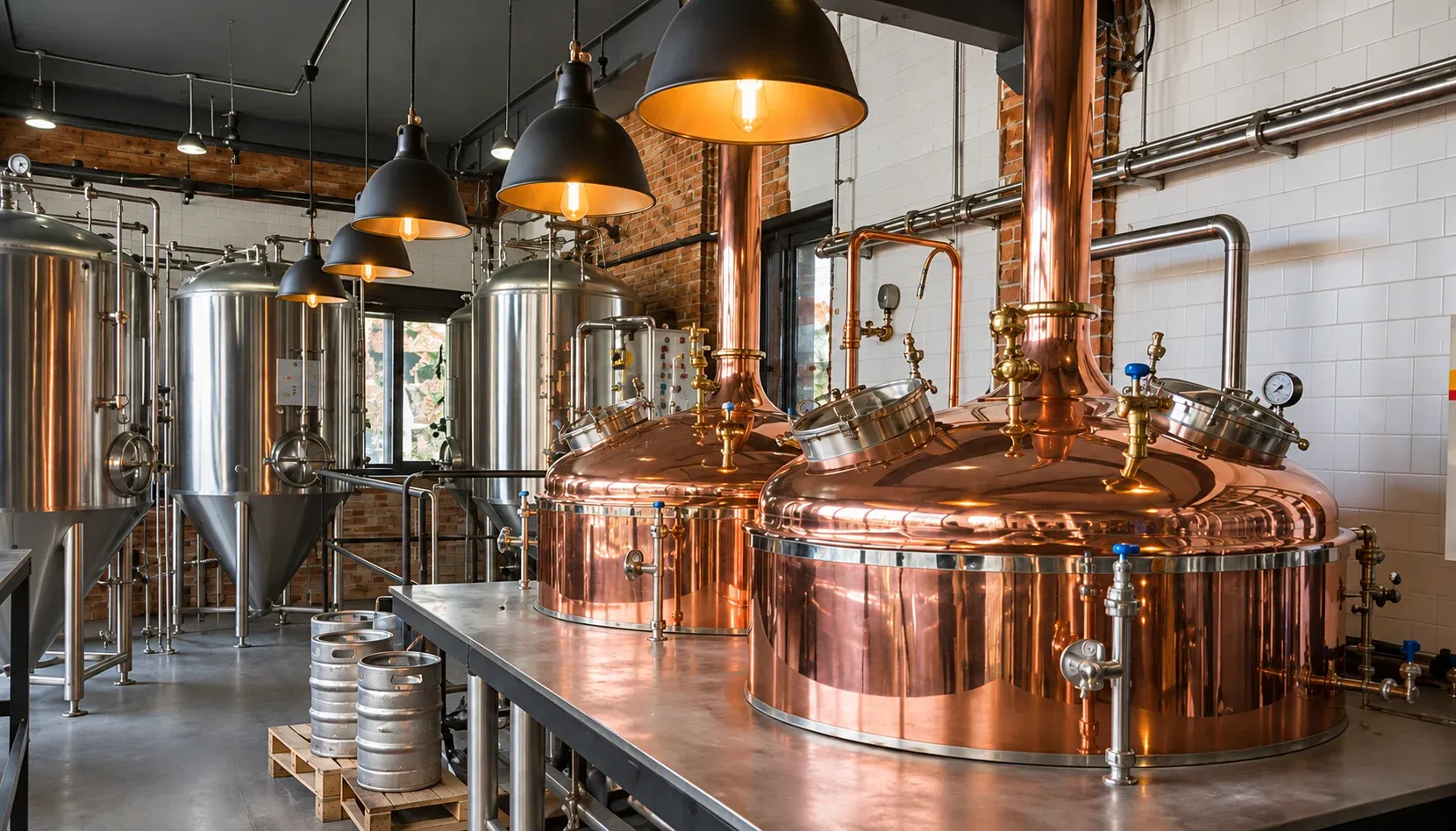
Here's the beer brewing equipment I'd point out on a tour, in the order the beer meets it. • Mill, mash tun, lauter tun and kettle: crushing, conversion, wort separation and the boil. • Plate heat exchanger: cools wort to pitching temperature with chilled water and glycol. • Cylindrical conical tanks (CCTs): the fermentation workhorse. The cone lets you dump yeast, and jackets hold temperature tightly. • Bright beer tanks: hold filtered beer under CO2 pressure. • CIP station: automated caustic, acid and rinse cycles.
Good beer brewing equipment isn't a shopping list but a system, and each piece must be sized for its neighbours, which is the real backbone of any beer manufacturing plant.
Filtration, Carbonation & Quality Control Before Packaging
After maturation the beer is still hazy with yeast and protein. Filtration fixes that, using kieselguhr with cartridges or membrane beer brewing equipment that cuts waste. In the bright beer tank, carbonation is tuned to spec, usually 2.4 to 2.8 volumes of CO2 for lagers. Dissolved oxygen is checked at every transfer, because oxygen is the fastest way to turn good beer into cardboard.
Then the lab takes over: gravity, ABV, colour, bitterness, pH, plus plates for wild yeast. This is where the beer manufacturing process proves itself or gets stopped. I once saw a batch held back over one failed plate. It hurt, but it was the right call, and it kept the beer brewing process honest.
How Automated Beer Filling and Packaging Lines Prepare Beer for Market
Packaging is where a beer manufacturing plant can undo a careful beer brewing process in seconds. A few extra parts per billion of oxygen at filling can dull hop aroma within weeks.
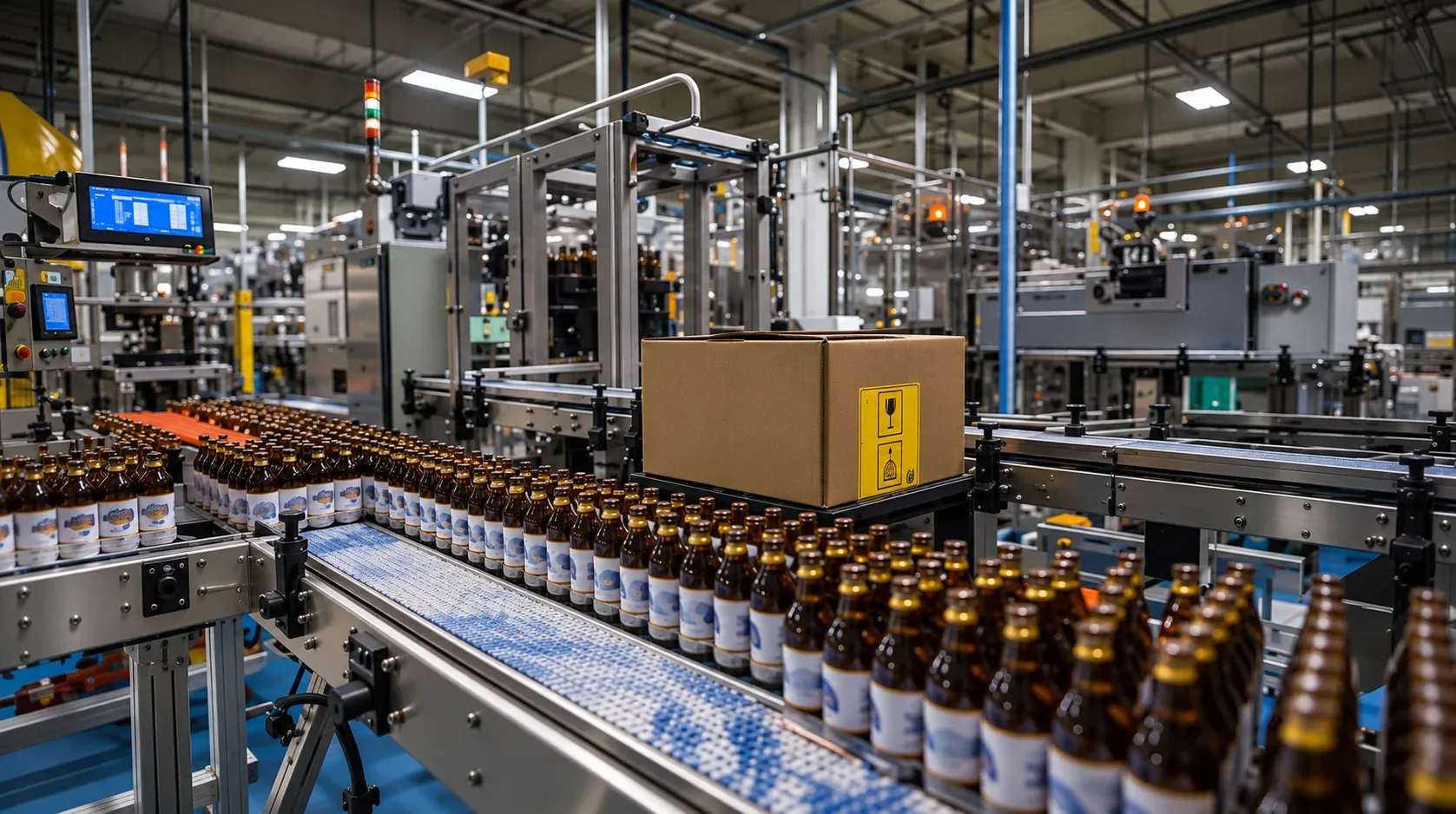
That's why isobaric filling matters: the container is flushed with CO2, then pressurized to match the beer tank, so beer flows in without foaming or touching air. On can lines, a rotary filler feeds an automated seamer that forms a double seam in a fraction of a second.
A line running 30,000 cans an hour needs rinsers, fillers, seamers, labellers and palletizers moving in step. In the beer manufacturing process, filling is as much a controls problem as a mechanical one. Serious beer manufacturing treats the filling hall as part of the brewhouse, so the beer production process doesn't end at the last tank valve.
Why Choose Seppa Solutions for Beverage Production & Brewery Solutions?
Seppa Solutions builds the kind of systems a beer manufacturing plant runs on. It offers custom stainless steel fabrication for beer brewing equipment and turnkey brewery layouts shaped around your beer production process, floor space and budget, plus plant integration support across the beer manufacturing process. A great fermenter that doesn't talk to the glycol system or the filler is just an expensive tank.
Its range also covers filling, labelling, palletizing and chilling for beer manufacturing lines. Planning a new beer manufacturing plant, or upgrading beer brewing equipment in an old one? Talk to them before the floor plan is fixed.
Frequently Asked Questions About Beer Manufacturing Plants
1. How do you manage dissolved oxygen during packaging?
Oxygen is the enemy of the beer brewing process after fermentation. Purge hoses, filler bowl and bright tank with CO2, use deaerated water for line pushes, and measure with inline DO meters. Most plants aim for under 50 parts per billion.
2. What utilities does a beer manufacturing plant need?
Steam is used in the kettle and for CIP, treated water (4-7 liters per liter of beer produced), glycol cooling system, compressed air, CO2, and electricity. All these utilities are sized on the basis of the maximum rather than average demand.
3. Can one beer manufacturing plant switch between ale and lager?
Yes, with planning. Lagers need colder, longer fermentation and more cold tank capacity. The beer manufacturing process changes little; tank scheduling changes a lot.
4. What does a CIP sanitation protocol look like?
For all the beer brewery equipment in beer production, there is a standard process that includes pre-rinse, hot caustic, rinse, acid, rinse, and sanitizer. The process temperatures, concentration, and contact times are all recorded by the PLC and confirmed via swab test.
5. How do you estimate return on investment?
Beer production model: capital expenditure, margin/HL, utilization and startup time. The payback is dependent more on throughput than installed capacity.