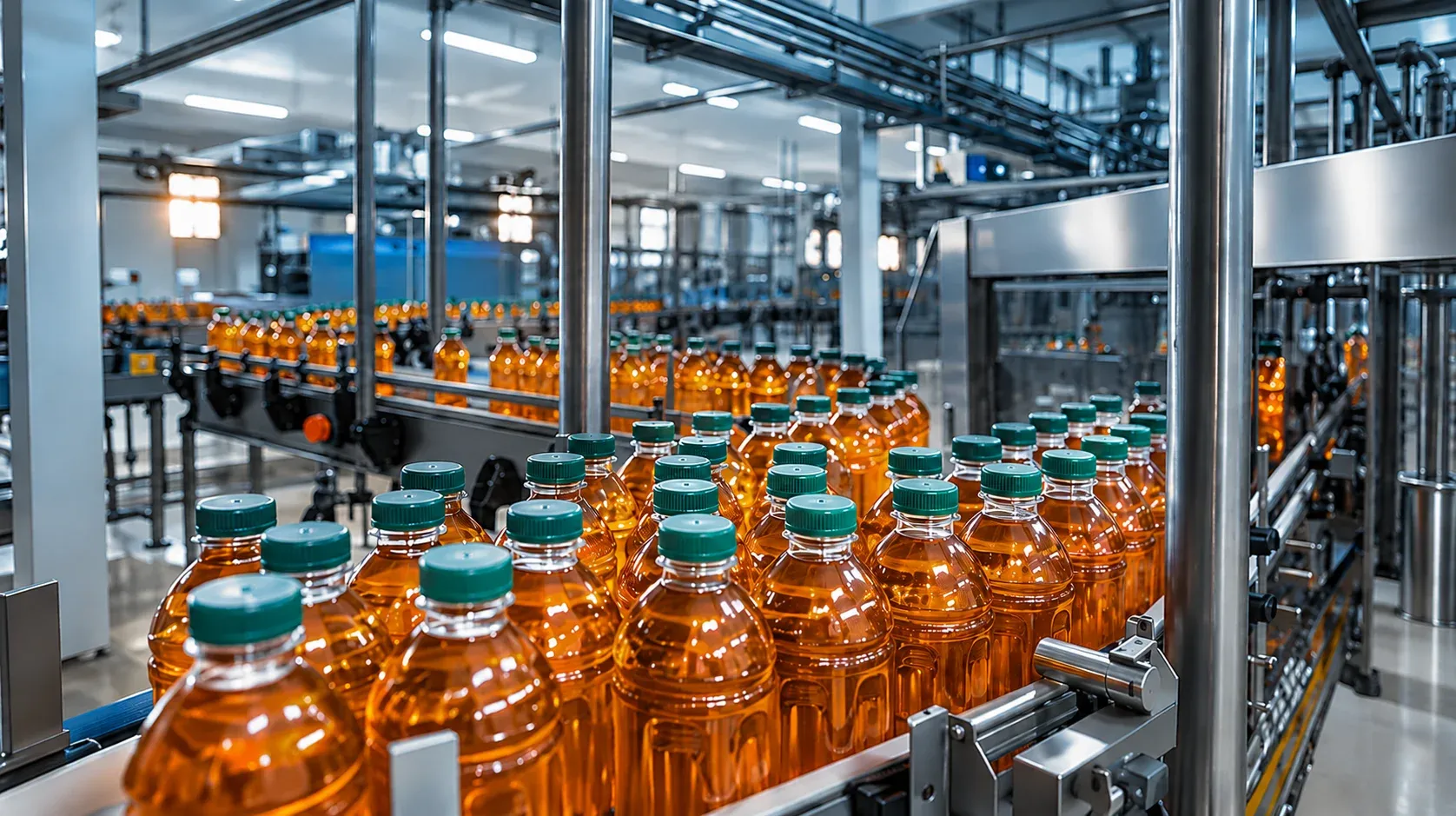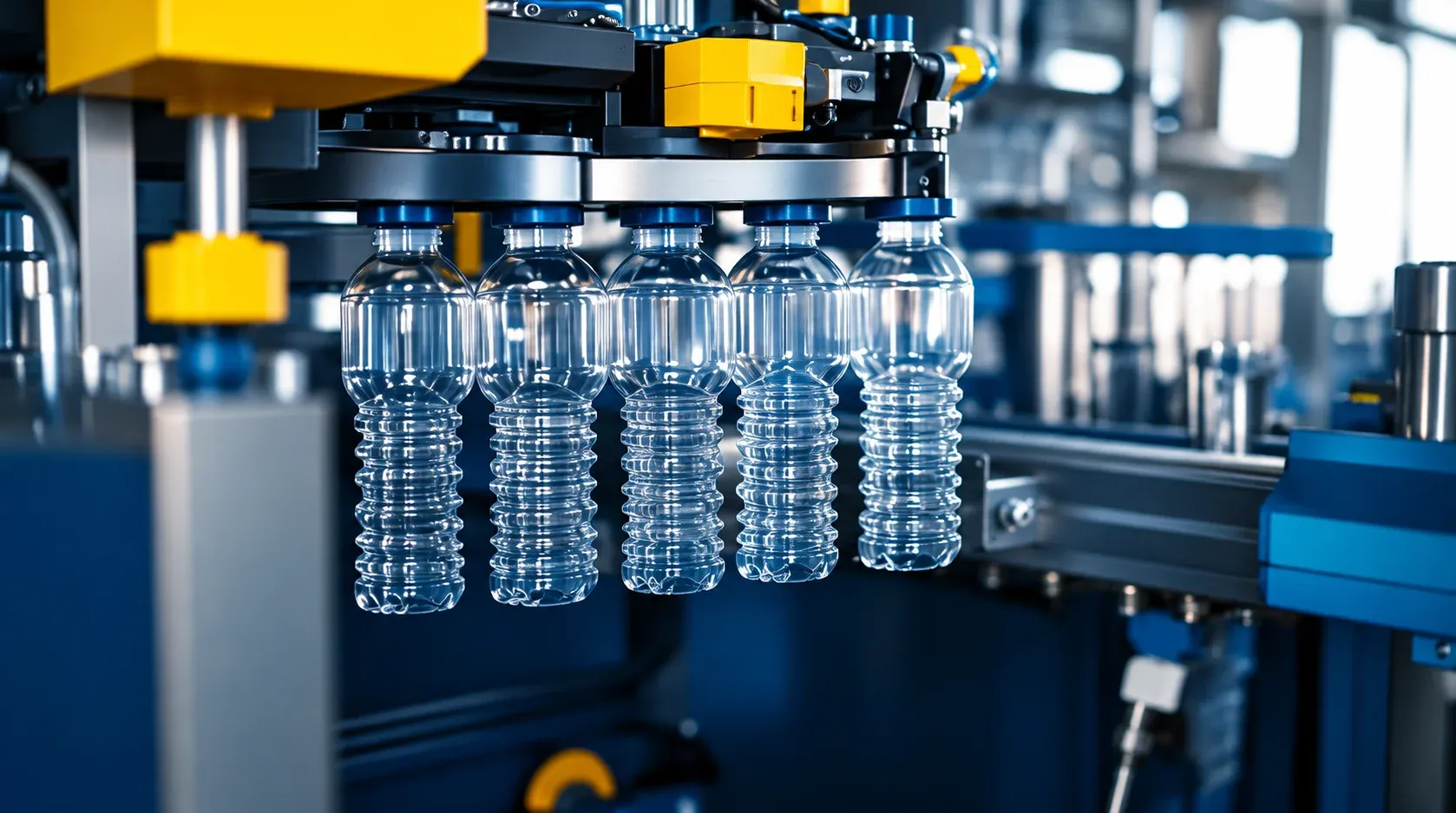
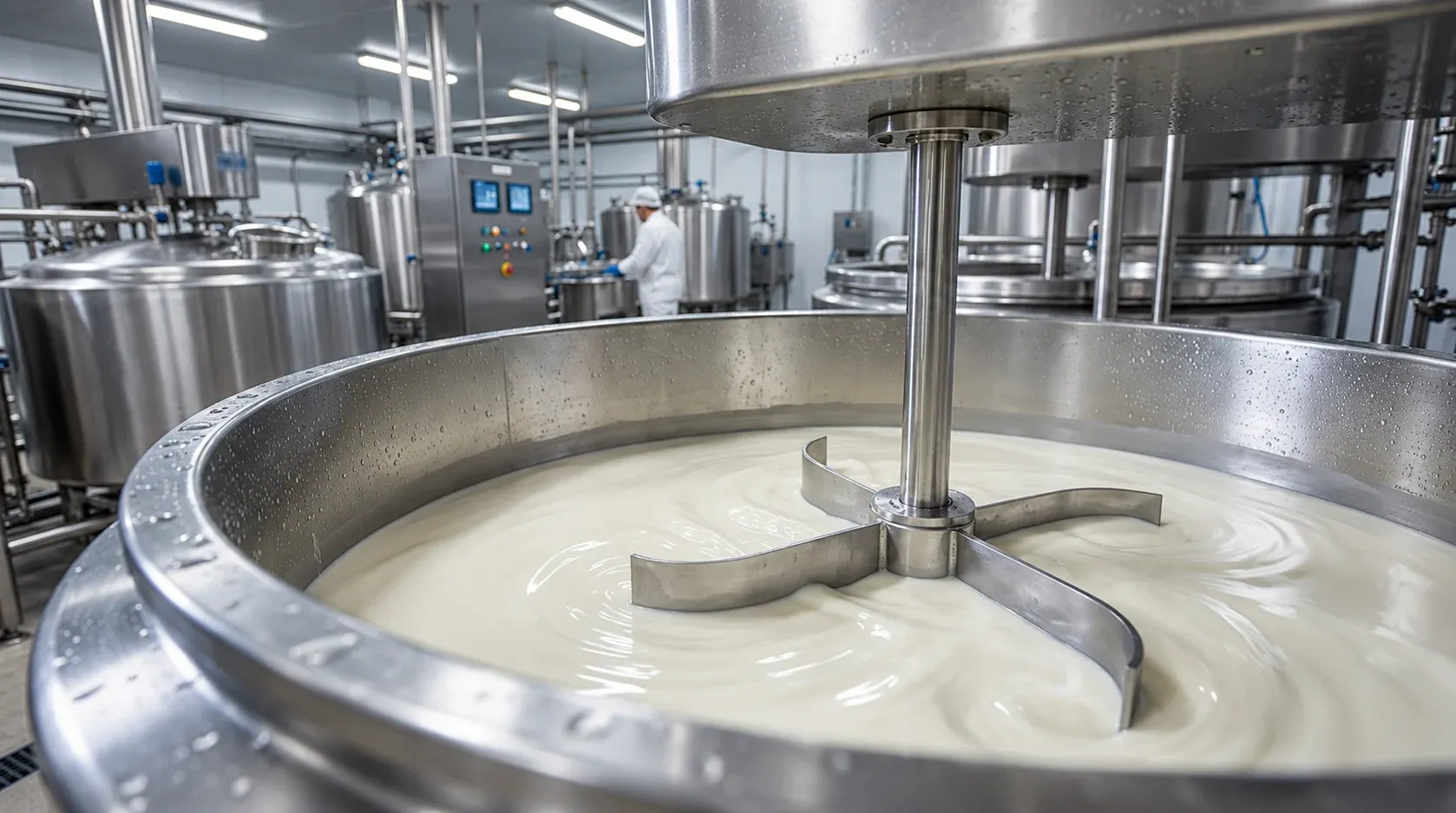
Walk onto any working bottling floor and you'll notice the same thing: nothing moves until the mix is right. Every can, bottle, or pouch downstream depends on what happens in the tank first. That's why beverage mixing equipment isn't just another line item on a capital budget it's the part of the plant that decides whether your product tastes the same in batch 400 as it did in batch 1.
I've walked plenty of production floors where the bottling line gets all the attention and the mixing room gets whatever budget is left over. That's backwards. If your beverage blending system can't dissolve sugar evenly or keep a stabilizer suspended, no amount of downstream automation fixes it.
What Is Beverage Mixing Equipment and How Does It Work?
At the simplest level, beverage mixing equipment takes separate ingredients water, syrup, flavourings, acids, CO2, functional additives and turns them into one consistent liquid. Sounds easy. It isn't, once you're running thousands of liters an hour and need every liter to match the last one.
The physics underneath is agitation: an impeller or rotor spins fast enough to create shear and turbulence, pulling ingredients through the batch until concentration gradients disappear. Get the speed wrong and you either undermix, leaving pockets of unblended syrup, or overmix, shearing proteins and whipping in unwanted air. Viscosity matters too a thin RTD mixer barely resembles the setup you'd need for a thick dairy base.
Temperature control matters just as much as speed. Many additives dissolve properly only within a narrow band, and jacketed vessels let operators heat or cool the batch without a second piece of equipment. None of this is exotic engineering it's physics that punishes shortcuts, which is why good beverage processing equipment earns its cost back fast.
Types of Beverage Mixing Equipment for Modern Production
Not every product needs the same machine, and this is where a lot of first time buyers overspend or underspend.
Sweep Agitators
These are the workhorses for viscous or particulate heavy products fruit purees, dairy bases, anything with pulp that would clog a high speed impeller. Sweep agitators move slowly along the tank wall, scraping and folding the product rather than blasting it with shear.
High Shear Mixers
When you need to dissolve powders fast or emulsify oils into water, common in flavoured waters and functional drinks, high shear mixers do the job in a fraction of the time a sweep agitator would take. The trade off is heat generation and a real risk of overmixing if nobody's watching the clock.
Continuous Blending Systems
An advanced continuous blending setup built for inline operation skips the batch tank entirely. Ingredients are metered and blended in real time as they flow toward filling. For high volume producers, this is often where the real efficiency gains hide, and it's a category worth understanding even if you're not ready to buy one yet.
Key Features of Beverage Mixing Equipment
Not all liquid mixing equipment is built the same, even if it looks similar from across the room. A few features separate machines that last fifteen years from ones that need constant repair:
• Sanitary stainless steel (304/316L). 316L resists corrosion from acidic juices and cleaning chemicals better than 304 worth the extra cost if you're running citrus or fermented products.
• Variable frequency drives (VFDs). These let operators fine tune mixing speed per recipe instead of running every batch at one fixed RPM, which matters when you're switching between a thin soda and a thick smoothie base on the same line.
• Temperature jackets. Essential for anything requiring precise thermal control during dissolution or pasteurization prep.
• Integrated automation controls. Recipe recall, batch logging, and alarm systems cut down on operator error the kind of error that shows up three weeks later as a customer complaint about flavour drift.
Batch Tanks vs Continuous Inline Blending: A Side by Side Look
Choosing between a batch tank and a continuous system usually comes down to volume and how often you change recipes. Here's how they stack up:
| Parameter | Batch Mixing Tanks | Continuous Inline Blending Systems |
|---|---|---|
| Production Volume Suitability | Best for low to mid volume, or highly variable SKUs | Best for high, steady-state volume runs |
| Recipe Changeover Speed | Slower; tank must be emptied, cleaned, and refilled | Faster; recipe parameters adjusted on the fly |
| Footprint & Space Requirements | Larger; needs holding tank plus mixing vessel | Smaller; often fits inline with existing piping |
| Energy Efficiency | Lower; reheating/remixing between batches costs energy | Higher; continuous flow avoids repeated startup losses |
Neither option is universally "better." A craft producer running twelve different flavours a week probably needs batch flexibility more than continuous throughput. A CSD plant running one formula around the clock is leaving money on the table without inline liquid mixing equipment doing the heavy lifting.
Benefits of Using Beverage Mixing Equipment
Upgrading your beverage processing equipment isn't just about speed. The real payoff shows up in places that don't make it onto a spec sheet.
Phase separation that layer of settled solids or oil at the bottom of a poorly mixed tank disappears when agitation is matched correctly to viscosity. Sugar dissolution time drops, sometimes by half, when high shear mixing replaces a slow paddle. Batch to batch consistency, the thing that actually protects your brand, comes from repeatable mixing parameters rather than an operator's gut feel about "how it looks."
There's also a quieter benefit: fewer rejected batches. Every failed batch is wasted syrup, wasted water, wasted labour, and a delayed shipment. Good equipment doesn't eliminate human error, but it narrows the room for it.
Applications of Beverage Mixing Equipment in Beverage Production
This equipment shows up everywhere in a modern beverage manufacturing equipment lineup, and the requirements shift with the product:
• Carbonated soft drinks need precise syrup to water ratios before carbonation, with minimal air incorporation.
• Juices especially pulp heavy ones need gentle agitation that preserves texture without breaking down fibers.
• Functional energy drinks often require high shear mixing to fully dissolve caffeine, taurine, and vitamin blends that don't go into solution easily.
• Dairy alternatives need careful temperature control to prevent protein denaturation during blending.
• Alcoholic RTDs combine base spirits, flavourings, and sometimes carbonation, requiring equipment that handles both liquid blending and gas integration.
Each of these categories has its own failure mode if the mixing step is wrong, which is exactly why generic beverage processing machinery rarely performs as well as equipment specified for the actual product.
Why Choose Seppa Solutions for Beverage Production?
Seppa Solutions builds every beverage blending system around the product, not the other way around. Instead of selling a standard tank and hoping it fits your recipe, the engineering team starts with your viscosity profile, throughput targets, and CIP requirements, then specs equipment that actually matches them.
That approach extends past the mixing stage. Seppa supports full turnkey lines raw ingredient handling through filling and packaging so this beverage processing machinery integrates with everything downstream instead of becoming a bottleneck three months after installation. For plant managers burned before by gear that "should have worked" on paper, that kind of end to end accountability is worth more than a lower quote.
Final Thoughts on Beverage Mixing Equipment
Reliable mixing technology is one of those investments that's easy to underrate until something goes wrong. Get it right, and product stability, consistency, and scalability follow almost automatically. Get it wrong, and you'll spend years chasing quality complaints that trace back to a tank that was never suited to the job. Whether you're scaling a startup brand or retrofitting a full beverage manufacturing equipment lineup, the mixing stage deserves the same scrutiny as the fancier equipment further down the line.
Frequently Asked Questions About Beverage Mixing Equipment
1. How do I choose the right agitator speed?
It depends on viscosity and shear sensitivity. Thin liquids tolerate higher RPMs, while protein based or pulp heavy products need slower speeds to avoid damage. Manufacturers provide starting parameters, but fine tuning happens during commissioning runs.
2. What's the difference between high shear and low shear mixing?
High shear mixing uses fast rotor speeds to break down particles and dissolve powders quickly ideal for emulsions and functional additives. Low shear, or sweep, mixing moves product gently, preserving texture in purees and dairy.
3. How does clean in place (CIP) work?
CIP circulates cleaning and sanitizing solutions through the tank and piping without disassembly, using spray balls and programmed cycles. It cuts changeover time compared to manual cleaning and lowers contamination risk between recipes.
4. How do I scale production safely?
Scale up in stages, testing mixing parameters at each volume increase rather than assuming a formula that works at 500 liters behaves the same at 5,000. Shear rates and mixing times rarely scale linearly.
5. Why does my product keep clumping?
Usually powders are hitting the liquid surface too fast, or agitation isn't strong enough to break up clusters before they hydrate unevenly. Slower ingredient addition, adjusted mixer speed, or an eductors style powder induction system usually fixes it.