I’ve stood on plenty of plant floors at the end of a long shift, and the pattern is always the same. One person hovers at the labeller. Another nurses the wrapper. Two more lift cases onto pallets, wincing. None of them are doing anything wrong. The machines just don’t know each other exist. That’s the gap Packaging Automation closes, and honestly, it’s less mysterious than the brochures make it sound.
Understanding Packaging Automation: How Modern Packaging Lines Work Together
A filler, a labeller, a wrapper and a palletizer are just four machines until something gets them talking. Packaging Automation is that something. Sensors spot gaps and backups. A PLC reads them and tells each machine to speed up, slow down or hold on. Encoder driven conveyors, the unsung packaging line equipment, keep spacing exact so bottles show up when the next station wants them. Not early. Not late.
I like the relay race comparison. Every runner knows when the baton arrives. Good Packaging Automation is mostly timing.
Then there are accumulation buffers. They sit between stations and soak up small hiccups. If the wrapper stalls for ten seconds, the buffer holds the bottles and the filler never even notices. That’s the whole trick, really: protect the filler from downstream trouble, and separate packaging machinery becomes one automatic packaging line. Ask about it first when you review any packaging line automation proposal.
From Filling to Labelling: Connecting the First Two Stages of Beverage Packaging
The wet end and the dry end don’t get along naturally. The filler is fussy and costs a fortune to stop. The labeller hates moisture, cold bottles and anything crooked. Between them sits a handshake.
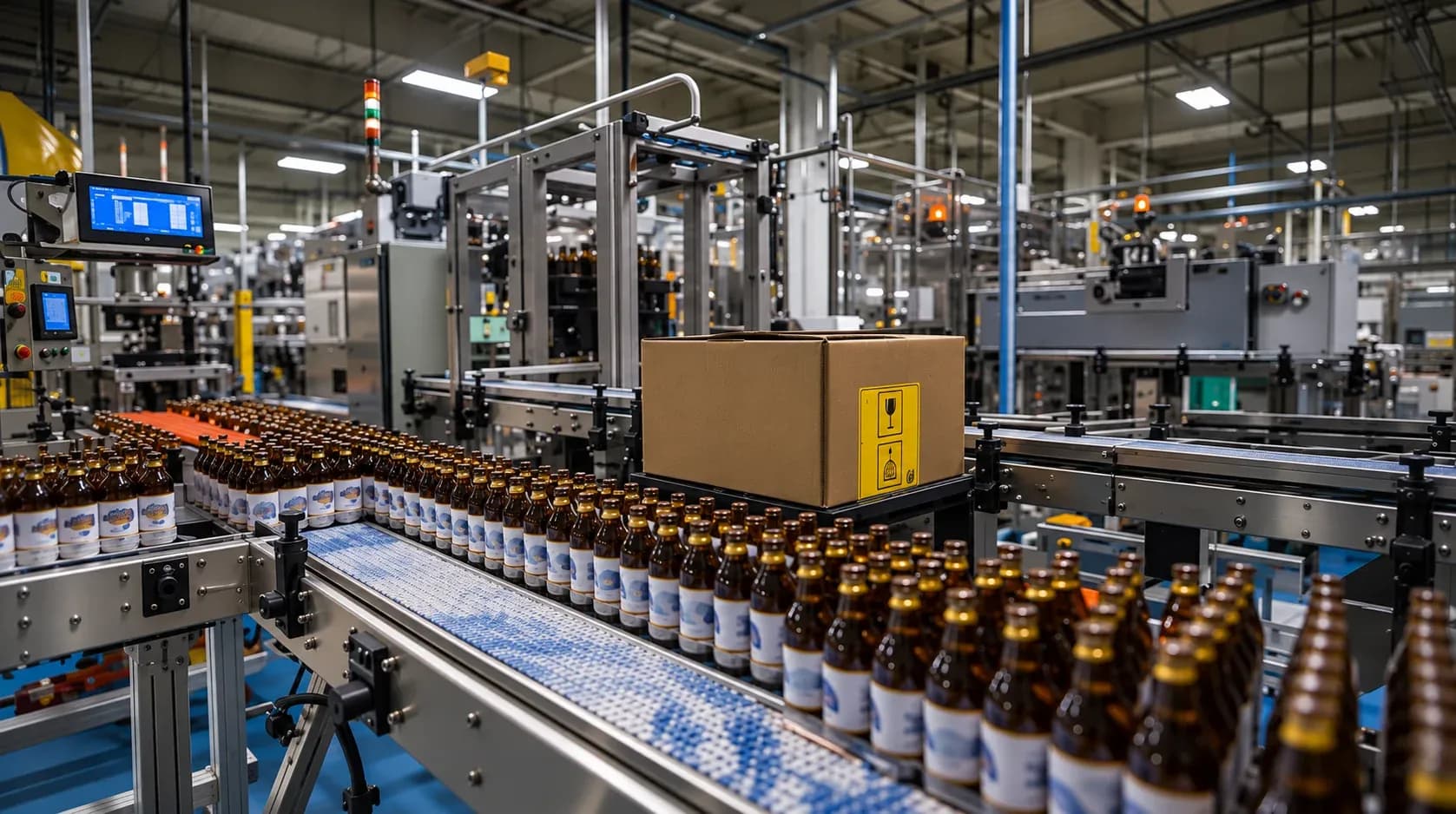
Bottles leave the capper, pass under air knives and settle into one steady lane. Skip the drying step on a cold fill and condensation turns your labels into a wrinkled mess. Feed the conveyor speed to the labeller as a live signal, and placement stays true even while the line ramps up.
Well-matched packaging machinery also cuts jams at the transfer point, which is where most bottle falls happen. Good packaging line equipment there means guide rails, star wheels and sensors built to hand containers over without a bump. It’s a small, quiet win for Packaging Automation.
Wrapping and Palletizing: Automating the Final Stages of the Packaging Process
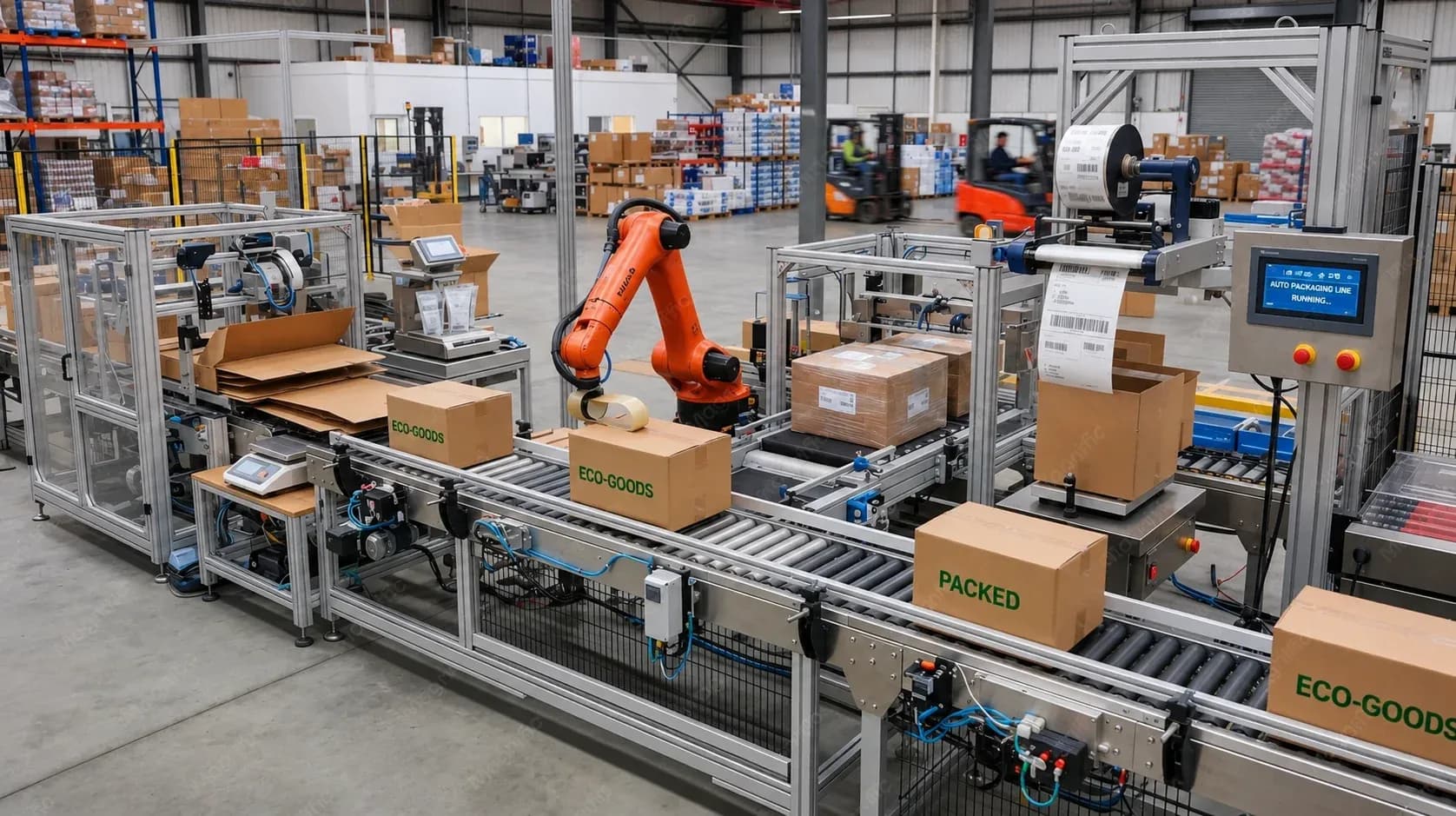
After labelling, bottles head for bundling. The packaging machinery here is simple in concept: shrink wrappers group bottles into packs, case packers drop them into cartons, and a heat tunnel sets the film. What matters in Packaging Automation is rhythm. Packs have to leave the wrapper at the pace the palletizer expects, or you get gaps and pile ups. A well tuned automatic packaging line holds that rhythm without anyone staring at the clock.
Then comes the heavy part, literally. An automated palletizing system uses a robot or a layer former to build stable pallets from a stored pattern. Layers get pressed, interlocked and checked, then a stretch wrapper locks the load. Nobody lifts a 20 kg case a thousand times a shift anymore. A dependable automated palletizing system also deals with slip sheets and rejects without stopping anything.
Comparative Analysis: Disjointed Stations vs. a Unified Automatic Packaging Line
| Parameter | Manual / Disjointed End of Line Stations | Unified Automatic Packaging Line |
|---|---|---|
| Inter Machine Synchronization & Buffer Control | Each machine runs at its own pace; improvised buffers | PLC linked speeds with accumulation buffers that absorb stoppages |
| Throughput Stability & Micro Stop Frequency | Frequent micro stops; output swings through the shift | Steady flow; stoppages are caught and cleared early |
| Labor Dependency & Operator Ergonomics | Staff on feeding, clearing and lifting; heavy repetitive strain | Operators supervise screens; no manual lifting |
| Container Scuffing & Secondary Damage Rates | Bottles collide in uncontrolled transfers | Controlled spacing and gentle transfers protect containers |
How Integrated Packaging Automation Improves Production Speed and Operational Efficiency
Speed isn’t about running every machine flat out. It’s about running them together, and that’s the real payoff of Packaging Automation. Synchronized speed ramps let the whole line accelerate or slow as one unit, so nothing starves or floods. Real-time diagnostics on packaging line equipment tell you which sensor tripped and when.
This is where packaging line automation earns its keep. Micro-stoppages look tiny, but they add up to hours. Cut them and you get more bottles per shift without buying a faster filler. Plants that invest in packaging line automation usually feel the difference quickly.
Labor changes too. Instead of four people feeding, clearing and stacking, one or two keep an eye on the automatic packaging line. Packaging Automation doesn’t get rid of people. It moves them from lifting to looking, and an automated palletizing system is usually where the relief shows up first.
Common Challenges in Connecting Filling, Labelling, Wrapping and Palletizing Equipment
Let’s be honest: Packaging Automation projects are rarely tidy.
Speed mismatches. A filler rated at 12,000 bottles an hour feeding a wrapper rated at 9,000 will bury your floor. Size the buffers, or the wrapper, to match.
Floor space. Old buildings weren’t made for long conveyors. Smart packaging line automation layouts, with turns and elevated runs, often save the day.
Format changeovers. Switching bottle sizes means moving guides, heads and pallet patterns across your packaging machinery. Recipe based settings in the PLC cut that down to minutes.
Sensor and communication gaps. Mixed brands of packaging line equipment often speak different protocols. A gateway usually solves it, but plan early. Any serious packaging machinery supplier should explain how their controls talk to others.
Key Factors to Consider When Choosing an Automated Beverage Packaging Line
• Container geometry: bottle shapes behave differently on a conveyor.
• Target line speed: size your packaging line automation for the speed you’ll run in three years, not today.
• Utility drops: check compressed air, power and chilled water at every piece of packaging line equipment.
• Future SKUs: ask what happens when you add a new bottle size or pack format.
• Footprint: measure the floor honestly, including service access for the automated palletizing system.
• Legacy equipment: confirm which existing packaging line equipment can connect and which needs a retrofit.
• Support: make sure your Packaging Automation partner picks up the phone when a sensor misbehaves.
Why Choose Seppa Solutions for Your Beverage Production Line?
Seppa Solutions builds the packaging machinery on both sides of that handshake: rinser filler cappers, labelling, conveyors, carton handling, stretch wrapping and an automated palletizing system. One team designs the layout, the controls and every handoff between packaging line equipment.
You get custom packaging line automation layout design for your floor, a synchronized turnkey automatic packaging line installation, and technical support that doesn’t disappear after commissioning. If you want Packaging Automation that works on day one and still works in year five, that’s the conversation to have.
Frequently Asked Questions About Packaging Automation
1. Can I connect a legacy filler to new end of line machines?
Usually, yes. Packaging Automation can wrap around an old filler with a controlled discharge conveyor, a signal interface and a buffer. The old filler keeps running while new packaging machinery handles everything after it.
2. How do I calculate the payback period?
Add up labour savings, reduced downtime, fewer damaged containers and extra output. Most plants find that micro stop reduction alone changes the math for an automatic packaging line.
3. How do multi size changeovers work?
With packaging line automation, each format is stored as a recipe in the PLC. Guides, speeds and pallet patterns adjust from one screen, so changeovers take minutes instead of a lost hour.
4. What does preventive maintenance look like?
Packaging Automation needs less babysitting than people expect. Check sensors, belts and chains weekly. Lubricate and test encoders monthly. Once a year, review the whole line, including the automated palletizing system.
5. How much operator training is needed?
Usually a few days for Packaging Automation basics, plus short refreshers. Operators learn to read alarms, clear faults safely, run changeovers and watch the automated palletizing system.